Stump Grinder Teeth: You're Probably Replacing Them Too Soon
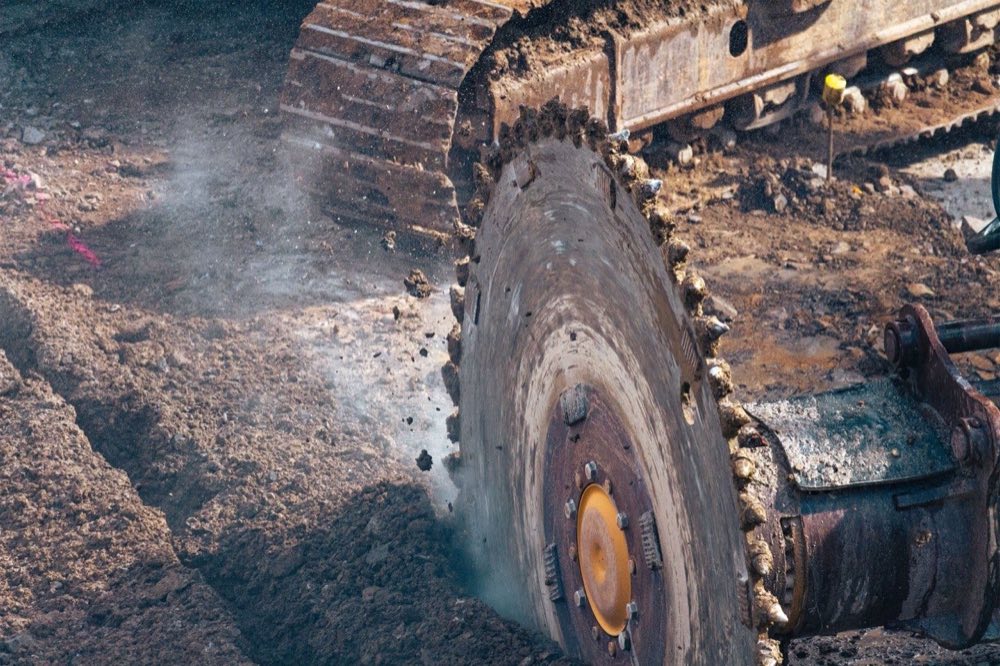
Most operators throw away a stump grinder tooth with two-thirds of its life left in it. Not because they’re careless — because nobody told them the tooth was still good. A modern stump tooth isn’t a one-and-done part; it’s a rotatable, multi-edge, re-sharpenable carbide tool, and the edge that just went dull is one of several you paid for. Grinding stumps is hard on teeth — they meet wood, soil, and rock all at once, below grade — so the teeth aren’t cheap, which makes getting full value out of each one the difference between a reasonable running cost and an ugly one. That starts with picking the right tooth, and then running it through its whole life instead of its first.
Green or red? Match the tooth to your ground
Before the lifecycle, the choice. Stump teeth come in two broad characters, and the shape of the carbide tip is the tell. Green teeth have a shallower dish on the concave tip, which makes them more impact-resistant but a slower cut. Red teeth have a deeper dish — more aggressive and faster, but less able to take a hit.
The deciding factor is what’s in your ground. If you’re grinding in rocky soil — roughly a quarter rock or more — go green, because the impact resistance is what keeps the carbide from chipping every time it finds a stone. In clean, low-rock ground, red grinds faster and you’ll get more done. It’s a genuine trade-off, not a good-better; when I buy stump grinder teeth I match the green-or-red to the sites I’m actually working, and size them to the machine (more on that below), rather than defaulting to whatever’s on the shelf. Put a red tooth into rock and you’ll be replacing chipped carbide; put a green tooth into clean dirt and you’re just grinding slower than you need to.
The lifecycle: turn, sharpen, then replace
Here’s the part that saves the money. A rotatable stump tooth typically gives you three edges, and the trick is knowing when to move to the next one. When the carbide rounds over about a sixteenth of an inch, that edge is done — but the tooth isn’t. Turn it to a fresh edge and keep grinding. You do that through all three edges before the tooth has given you anything like its full service.
Only once you’ve used every edge do you sharpen. Greenteeth-style teeth take a 4-inch by quarter-inch diamond wheel, and the one rule is to hold the correct angle so you’re restoring the edge, not reshaping the tooth. A tooth that’s been turned through its edges and then sharpened has done several times the work of one that got binned the first time it dulled.
Replacement comes last, not first — when the carbide is genuinely spent, cracked, or broken past what sharpening can recover. If you’re reaching for new teeth after the first edge goes soft, you’re paying three or four times what you need to. Turn, then sharpen, then replace, in that order.
Size the teeth to your machine
None of that matters if the tooth doesn’t fit your grinder. Stump teeth are sized to machine power — the common series run 500 for compact grinders under 20 hp, 700 for mid-range machines around 20–45 hp, 900 for professional grinders in the 40–85 hp range, and 1100 for high-production machines above 85 hp. On top of that, brands run their own systems — Vermeer’s Yellow Jacket teeth and pockets, plus Rayco, Carlton, and Bandit patterns — so a tooth has to match both the power class and your machine’s pocket. And the pocket is part of the system: a worn or wallowed pocket ruins a new tooth as fast as you can fit it, so it gets inspected right alongside the teeth. Order by your machine and system, not by the words “stump teeth.”
The signs that say “now”
Your grinder will tell you when a tooth needs turning, sharpening, or replacing if you’re listening. Watch for slower grinding, more vibration than usual, an uneven cut, and — the obvious one — visible wear or breakage on the carbide. Dull teeth don’t just slow you down; they burn more fuel and put extra stress on the wheel and pockets. Catch it at the round-over stage and it’s a two-second turn of the tooth. Ignore it and you’re grinding on damaged carbide, which is how you end up replacing teeth and pockets.
Run the whole lifecycle and stump teeth stop being an expensive surprise: pick green or red for the ground you’re on, size them to your machine and pocket, and then turn and sharpen your way through each tooth before you ever reach for a new one. The teeth you’re already buying have far more grinding in them than most crews ever use.